Most brands find out how AI describes them by typing their own name into a chatbot and reading whatever comes back. That is a sample of one, on one day, in one model. Microsoft has now turned that question into a report, and the useful part is not the headline number.
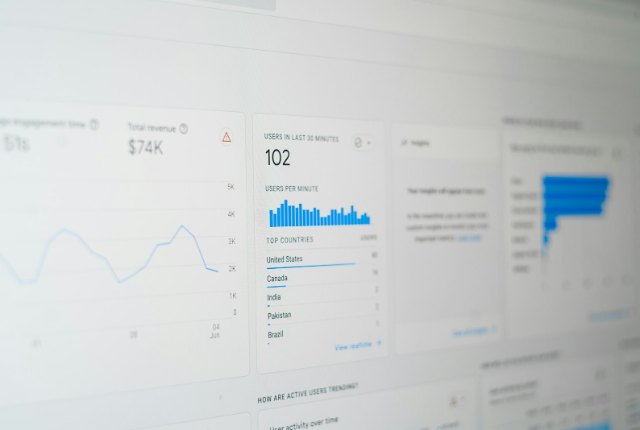
Microsoft Advertising’s August product update added Topic Insights to the AI Visibility reporting inside Microsoft Clarity. Instead of listing individual citations, it groups them by subject: which topics AI systems associate with your brand, how often those topics come up, and where you are absent.
Three metrics worth understanding
Microsoft defined the vocabulary alongside the release:
- Grounding queries: the retrieval searches an AI system runs before it writes an answer
- Citation share: how often your domain shows up as a cited source
- Share of authority: how often your domain is cited compared with competing sources
Grounding queries are the interesting one. When somebody asks an assistant a messy conversational question, the system does not search for that string. It writes its own retrieval queries first. Those queries are the actual demand you need to be present for, and they are usually not what your keyword tool shows you.
Microsoft’s own recommendation, in the August Microsoft Advertising update, is to compare grounding queries against your existing search terms report, pull new keywords and negatives out of the difference, and adjust landing pages where competitors are cited instead of you.
What a small team should do with this
A concrete version. A software company selling scheduling tools to dental practices ranks for “dental appointment software” and buys that term. Topic Insights shows the brand cited on “practice management” and almost never on “patient no-show reduction”, where three competitors appear instead.
That is not a keyword gap in the traditional sense, because almost nobody types that phrase into a search box. It is a topic the retrieval layer generates on its way to answering “how do I stop patients missing appointments”. The action is a page that answers that question properly, not a keyword inserted into an existing one. It takes a day. The alternative is continuing to buy the term you already own.
The rest of the August update
Two Performance Max experiment types are now available: uplift experiments, which measure what PMax adds on top of existing campaigns, and upgrade experiments, which compare an existing Search or Shopping campaign against PMax after migration. Microsoft’s setup guidance is at least 30 conversions in the previous 30 days, identical bidding targets and settings between test and control, and four to twelve weeks before reading results.
That last number is the one people will ignore. A four week read on a low volume account is noise wearing a result’s clothing.
Ad Preview Hub now covers Performance Max as well, and adds Bing results page previews, so creative can be reviewed and signed off through a shareable link before spend starts rather than screenshotted afterwards. For an agency chasing legal or brand approval on assembled creative, that is a small workflow change that removes a recurring argument.
What can go wrong
The obvious limit: this is Microsoft’s view of AI citation behaviour, drawn from what Clarity can observe. It is not a complete census of every assistant. Treating share of authority as a precise market share figure will lead you somewhere silly.
Microsoft also continues to cite an average 8% increase in incremental conversions from Performance Max. That is a vendor figure about a vendor product. It is a reason to run the uplift experiment, not a substitute for running it.
And this may not be worth your week at all. If you are a local business with a small Bing footprint, the reporting is real but the audience it describes may be too small to build a process around. Check the volume before you commit anyone’s Tuesday to it.
The uncomfortable part
Every platform is now shipping its own AI visibility report, each measuring a slightly different thing, none of them agreeing with the others. Google shows AI impressions in Search Console. Microsoft shows citation share in Clarity. Neither tells you whether a person saw your name and remembered it.
The honest use of these tools right now is directional: find the topics where you are absent and competitors are present, fix the content, check again in a quarter. Anyone building a board-level KPI on these numbers this year should expect to rebuild it. We made a similar point about what Google’s AI impressions number does not mean.
Editor’s note: This area changes quickly, so check the latest platform policy before making compliance decisions.
Update, 11 August 2026: Clarity now splits branded from non-branded AI citations
Microsoft has added a distinction to the AI Visibility reporting described above: citations are now separated into branded and non-branded. Branded citations come from prompts that already contain your company name. Non-branded citations come from prompts that do not.
That split matters more than it sounds. A healthy-looking citation share made up almost entirely of branded prompts tells you that people who already know you can find you, which was never in doubt. The non-branded number is the one that tells you whether an assistant recommends you to somebody who has never heard of you, and on most accounts it is dramatically smaller. Microsoft is also explicit that the figure represents your share within what Clarity observes, not your share of the entire AI search market, which is worth repeating to anyone about to put it in a board deck.
The advice in the original post stands unchanged. Compare grounding queries against your search terms report, act on the topics where competitors appear and you do not. The only thing that changes is which number you report: filter to non-branded before you write anything down, and track that figure over time rather than the combined total.